

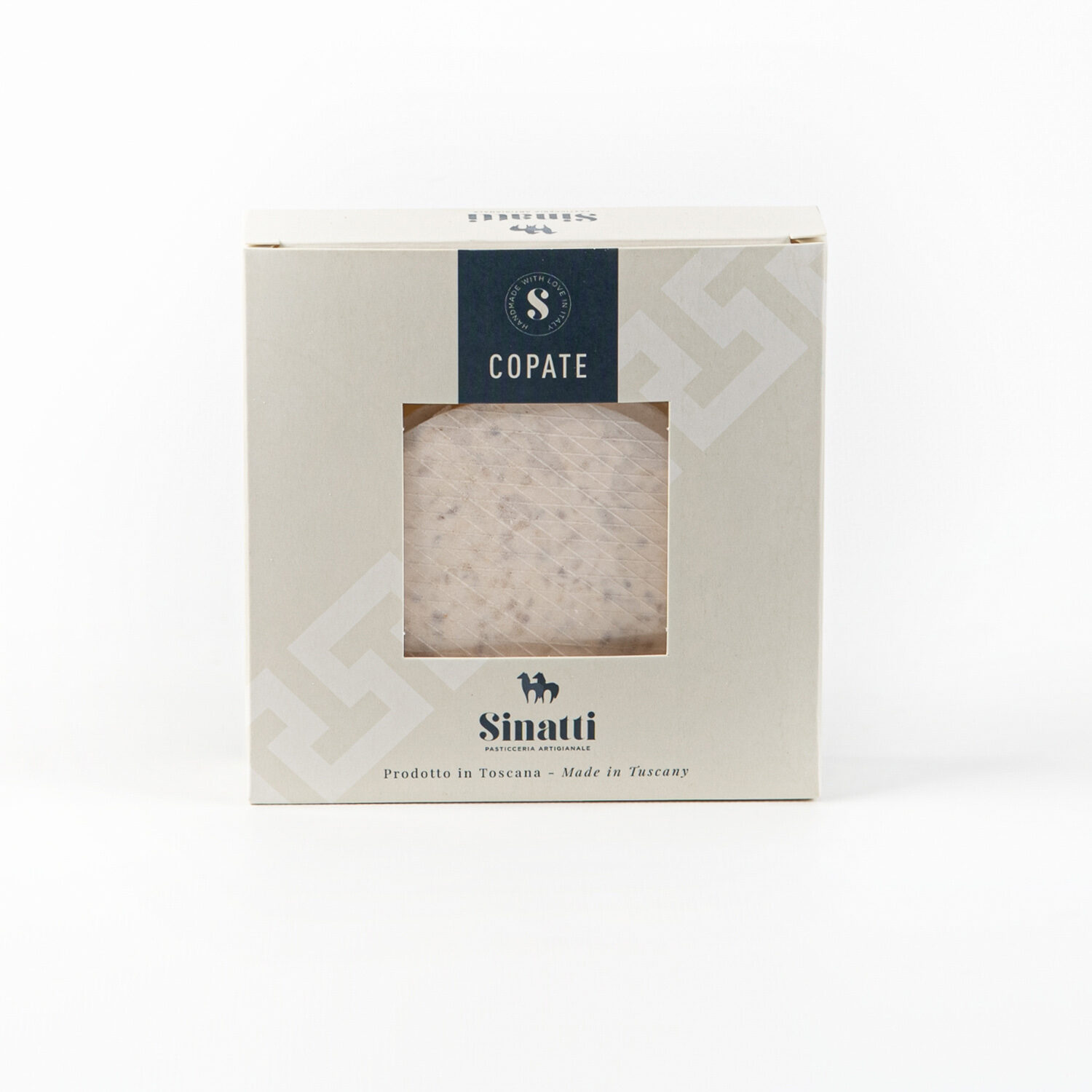
Copate
€ 10,00
5 in stock
Description
Copate are one of the finest and most “hidden” treasures of the Sienese confectionery tradition. Although less famous than Panforte or Ricciarelli outside Tuscany, they represent the pinnacle of Siena’s gastronomic elegance.
Here is a detailed description of this aristocratic dessert:
1. What are they?
Copatas are thin, crispy, circular-shaped treats (usually about 5-7 cm in diameter) enclosed between two white wafers. The texture is a perfect balance between the fragility of the wafer and the firmness of the crispy interior.
2. The Ingredients and the Taste
The inner dough is a kind of nougat that is low in sugar but rich in flavor, consisting of:
-
Honey and Sugar: Bring to a boil to create the binding syrup.
-
Dried fruits: Toasted almonds and walnuts, finely chopped (almost to a grain).
-
Aromas: Often enriched with a hint of aniseed or vanilla, which imparts that scent typical of historic Sienese workshops.
-
Cocoa: There are two versions, the “white” (traditional) and the “black” (with cocoa added to the dough).
3. The History and the Name
The name “Copata” probably comes from the Arabic term qubbaita (almond cake), reflecting the ancient trade and cultural exchanges of the Middle Ages.
Legend has it that they originated in the 18th century at the hands of a monk at the Abbey of Monte Oliveto Maggiore, or perhaps in the kitchens of cloistered nuns, who used wafers (normally intended for the liturgy) to create a cake that was easy to handle without getting their fingers dirty.
4. Distinctive Features
Unlike Panforte, which is spicy and dense, or Ricciarelli, which is soft and almondy, Copata is distinguished by:
-
Lightness: It is an “ethereal” dessert, almost a fancy cookie.
-
Aesthetics: The contrast between the pure white of the outer wafers and the dark, grainy heart is visually very elegant.
-
Rarity: It is more difficult to find than other Sienese pastries, often relegated to the oldest, artisanal bakeries in the historic center.
How to enjoy them
They go divinely with a glass of Vin Santo del Chianti or an excellent dessert wine such as Moscadello di Montalcino. They are the ideal end of the meal for those looking for something sweet but not overly heavy.
Reviews
There are no reviews yet.